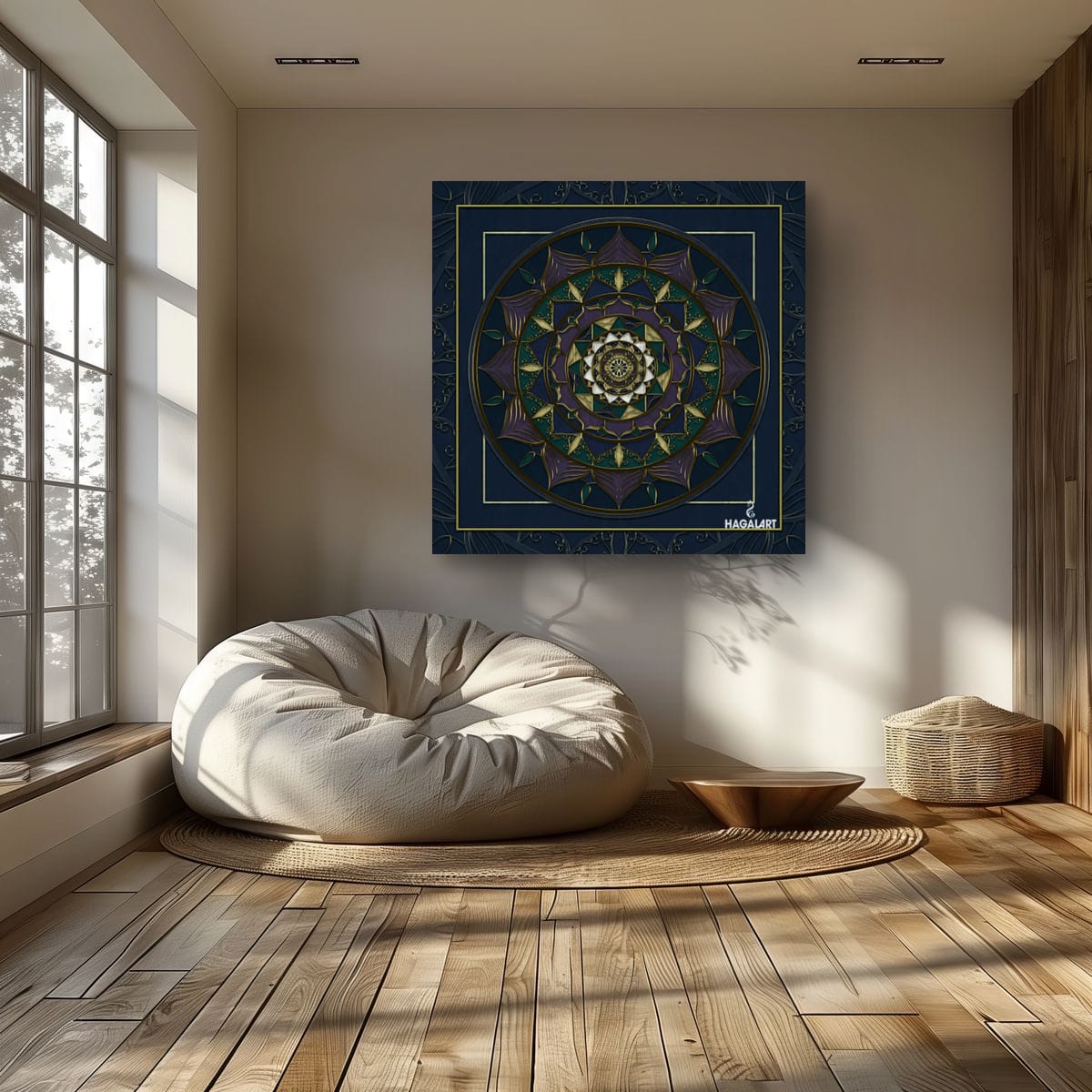
Ananke, necessity and freedom
The goddess nothing escapes
“Destiny is the synthesis, paradoxical only in appearance, of necessity and freedom.”
In Greek myth Ananke is Necessity. No created being escapes her: not particles, not amoebas, not humans, not even the gods.
The goddess appears for the first time in Plato's Parmenides, and the context suggests an Orphic and therefore Hindu derivation. Hence the reference to the concepts of Dharma, the law proper to each being, and Karma.
Destiny as unfolding
The mandala is born from a precise idea: destiny as the unfolding of the possibilities of each being.
For the human condition, destiny is, on one side, the whole spectrum of what happens. On the other, it is what defines who one is. Understanding it, accepting it, integrating it into the mind and the emotions means recognizing one's belonging to the order of the cosmos. That is where the opposition between necessity and freedom dissolves.
The artwork
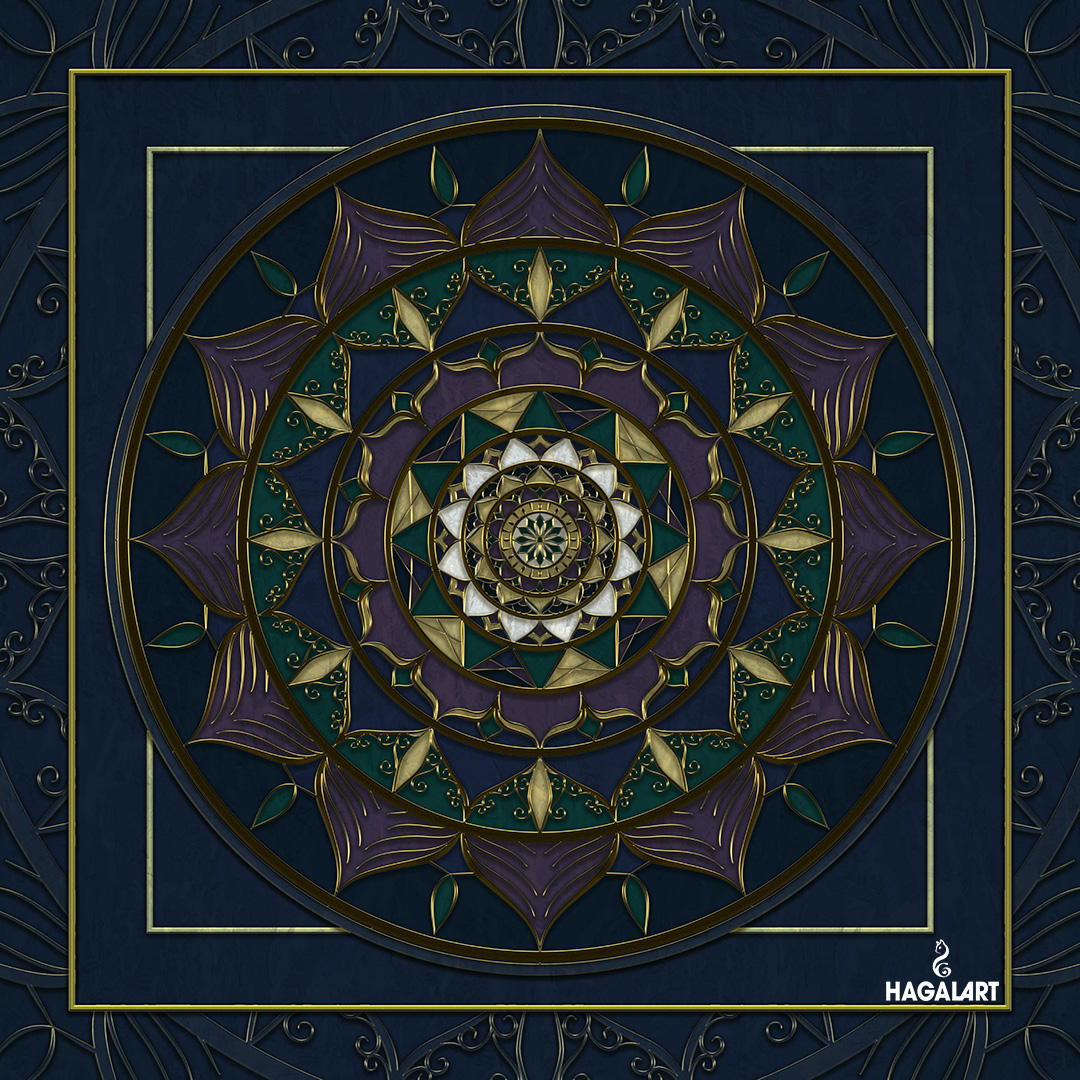
Square forms and circular forms are bound by a single structure, and make the two poles of the theme visible:
- Squares: necessity, law, what is determined.
- Circles: freedom, the cosmos, what is possible.
Together they become the sign of the great cosmic game, without which there would be no comedy, no fall, no resurrection. There would be no life.
The colors
Night blue wraps everything, like the sky of the spheres. The violet of the outer petals carries mystery, the emerald green of the crowns the life that grows within the law. Gold draws the boundaries, and at the center a white star opens like a point of stillness.
Making peace with one's destiny does not mean surrendering.
What, of one's destiny, has already been chosen?